
Women’s hair thinning is different from men’s — it rarely makes a neat bald spot, it usually shows up as a widening part, a see-through crown when your hair is tied, and a ponytail that suddenly feels half as thick. And it is far more common than most people realise: up to 40% of Indian women notice significant thinning by the time they reach 40, most often from hormonal shifts, thyroid issues, iron or vitamin D deficiency, postpartum shedding, or plain stress. The good news is that non-surgical coverage for women has never been better — toppers, patches, wigs and clip-in extensions can all look completely natural, and most go on in under two minutes. This guide explains the four options, when each one is the right choice, what each actually costs in India in 2026, and how to pick one that blends so well nobody can tell.
Quick answer: if your thinning is localised — a widening centre part, a thinning crown, less volume on top — start with a clip-in hair topper (₹13,000–24,000 here), because your own hair frames it and it comes off at night. If there is one defined thin spot, a small hair patch works. If thinning is extensive or you are going through treatment like chemotherapy, a full-head wig (₹26,000–32,000 in human hair here) is the answer. If you mainly want overall density and length back, clip-in extensions or a volumizer are the lightest touch. Whatever you choose, treat the underlying cause with a dermatologist in parallel — coverage fixes how you look today; treatment fixes why it is happening.

The four options at a glance
| Option | Coverage | How it attaches | Price in India (2026) | Best for |
|---|---|---|---|---|
| Hair topper | Crown, part line, top of head | Pressure clips onto your own hair — on and off in seconds | ₹7,500 – ₹33,900 market; ₹13,199–₹23,999 here | Diffuse thinning at crown/part with healthy hair around it |
| Hair patch | One defined area (crown spot, part, temples) | Clips, tape or adhesive | ₹10,000 – ₹25,000 | A single visible thin or bald spot |
| Full-head wig | Entire scalp | Straps, combs, clips, or adhesive | ₹5,000 synthetic – ₹60,000 human hair | Extensive or total hair loss, chemotherapy, full restyle |
| Clip-in extensions / volumizer | Sides, back, overall density, length | Snap clips onto sections of your hair | ₹1,200 – ₹28,000 | Fine or flat hair needing volume and length, not bald spots |
Prices are typical Indian retail ranges at the time of writing; our own products are linked with exact prices below. On this site prices display in your local currency.

First, understand your pattern of thinning
Women’s thinning almost always follows a pattern: it starts at the centre part and spreads across the crown in a “Christmas-tree” shape, while the front hairline usually stays intact. That pattern — diffuse thinning over the top — is exactly what toppers are built for. A defined bald spot, by contrast, suits a patch.
Common causes in Indian women, in rough order of frequency: hormonal shifts (PCOS affects up to 1 in 5 women of reproductive age; perimenopause and menopause drop the estrogen that protects hair; postpartum shedding typically appears 2–4 months after delivery and resolves in 6–12 months), thyroid disorders, nutritional gaps — iron/ferritin and vitamin D deficiency are extremely common and widely under-tested — chronic stress (telogen effluvium, appearing 2–3 months after the stressful event), hard water and heat styling, and traction from tight ponytails and braids over years.
When to see a dermatologist: a part that is visibly wider than six months ago, losing more than roughly 100–150 hairs a day for three months or more, sudden patchy loss, or thinning paired with fatigue, weight changes or cycle irregularities. Get iron/ferritin, vitamin D, and thyroid (TSH, free T4) tested. A topper or wig covers the look today; treating the cause is what protects the hair you still have. None of the options below treat the cause — they are cosmetic, and they are very good at it.
Option 1: hair topper — the default for women’s thinning
A topper is a small-to-medium hairpiece — typically covering the crown, part and top of the head — that clips onto your existing hair. Because your own hair remains visible around and through it, a well-matched topper is the most natural-looking option for partial thinning, and it is the one most women should start with.

What to look for: a silk or mono top so the parting looks like your own scalp showing through (our base types guide explains each material); a base size matched to your thinning area, not one-size-fits-all; lower density than men’s pieces — roughly 80–110% — because women’s hair is finer and heavy density looks obvious on a part line; and a colour matched in daylight, not under shop lights. On this site the Mirage Hair Topper for ladies starts at ₹13,199 and the Premium Mirage Topper at ₹23,999; browse the women’s toppers collection and the full topper range.

Option 2: hair patch — for one defined spot
A hair patch is a smaller piece covering a single thin or bald area — a crown spot, a widening part, the temples. It can clip in like a mini topper, or be taped/bonded for a more fixed wear. Patches suit women whose thinning is concentrated in one place rather than spread across the top.
Related guide: toppers and women’s patches are sized to the thinning patch, not the skull — our hair patch size guide explains how to measure for a 3.5×4 to 5.5×5 topper and when to size up.
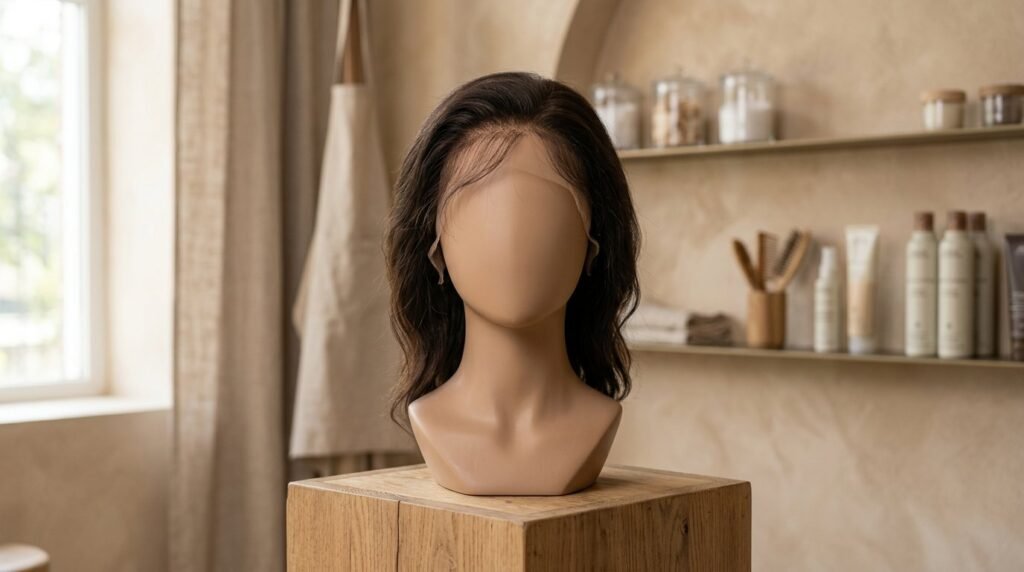
On this site the Ladies Hair Patch Mono, low density is ₹19,199 and the Mirage Ladies Hair Patch is ₹23,999; see the women’s hair patch collection. If you go the bonded route, our step-by-step application guide covers tape placement, positioning and safe removal.
Option 3: full-head wig — for extensive loss or a full restyle
A wig covers the entire head and replaces all visible hair, so it needs no natural hair to clip onto — which makes it the right answer for advanced thinning, alopecia, or chemotherapy-related loss, and also the most dramatic style change if that is what you want. Modern human-hair wigs with lace or silk caps look and move like your own hair; heat styling is fine on Remy human hair.
Our range: Ladies Full Head Wig at ₹26,399, the Ladies Full Head Mirage Wig at ₹32,399, plus a budget synthetic bob wig at ₹5,999 for trying the look first. Compare the categories in our wigs vs hair patches guide and browse women’s wigs.
Option 4: clip-in extensions and volumizers — for density and length
If your hair is fine, flat or thinning all over rather than in one spot, clip-in extensions add length and volume across the sides and back in about a minute, and a volumizer adds density at the crown. They are the least committal option and the cheapest — and they pair naturally with a topper if you want both crown coverage and length.

On this site, five-clip straight or curly sets (24–26 inch, 200 g) run ₹1,199–₹1,499, multi-piece sets ₹1,799, and the Ladies Hair Volumizer clip-in is ₹27,599 for maximum volume. The hair extensions collection has the full range.
What each option actually costs in 2026
Market-wide, human-hair toppers run about ₹7,500–34,000, full wigs ₹19,500–59,000, patches ₹10,000–25,000 and clip-ins ₹1,200–28,000 depending on length, grams and hair quality. Here is our own range with exact prices, so you can compare like for like:
| Product on this site | Type | Price | Typical lifespan |
|---|---|---|---|
| 5-clip straight/curly extensions, 24–26″, 200 g | Clip-in extensions | ₹1,199 – ₹1,499 | 12–24 months with care |
| Mirage Hair Topper, ladies | Topper, clips | ₹13,199 | 12–18 months |
| Ladies Hair Patch Mono, low density | Patch, clips/tape | ₹19,199 | 6–12 months |
| Premium Mirage Hair Topper, ladies | Topper, silk/mono top | ₹23,999 | 12–24 months |
| Mirage Ladies Hair Patch | Patch, bonded option | ₹23,999 | 8–12 months |
| Ladies Full Head Wig | Full wig, human hair | ₹26,399 | 12–24 months |
| Ladies Hair Volumizer clip-in | Volumizer, clips | ₹27,599 | 12–24 months |
| Ladies Full Head Mirage Wig | Premium full wig | ₹32,399 | 18–24 months |
| Synthetic bob wig with bangs | Budget full wig | ₹5,999 | 6–12 months |
Lifespans assume daily wear with good care and nightly removal for clip-on pieces; see our lifespan guide for what shortens them. Bonded pieces need tape/solvent — budget ₹500–900 a month.

How to choose: base, size, colour, density
- Base: silk or mono top for anything at the part line — it mimics scalp so the part looks real; lace for maximum breathability in heat; skin (poly) if a bonded patch is your choice. The base types guide walks through all four.
- Size: measure the thinning area, not your whole head. A topper should cover the thin zone and blend into healthy hair at the edges — if it is bigger than the thin area, the edge shows.
- Colour: match to your own hair in natural daylight, ideally the mid-lengths rather than the roots (roots are usually darker). Bring the piece to a window before buying.
- Density: for women, lighter is more natural — 80–110% density on a part line; heavy density is the most common “I can tell” giveaway.
- Hair quality: 100% human Remy hair styles, washes and lasts years; synthetic is cheaper but cannot take heat and frays faster. Under about ₹6,000 for a full human-hair piece, be suspicious.
Care: make it last (and keep your scalp healthy)
The routine is the same one our 10-step care guide covers in detail: brush gently twice a day with a wide-tooth brush, wash every 7–10 days with sulphate-free shampoo, deep-condition every wash, air-dry or low heat, and — for clip-on pieces — take it off at night and sleep on a silk pillowcase or in a silk bonnet. Rotate the clip positions slightly each time so you are not stressing the same section of hair — that is what prevents traction damage on top of thinning. Never sleep in clips or bonded pieces. Our lifespan guide covers what kills these pieces early: heat, sweat, sun and product buildup.

Five mistakes women make when buying coverage
- Buying a full wig for a crown problem. If your sides and back are healthy, a topper on the thin area looks far more natural than covering everything. Wigs are for extensive loss or a deliberate full restyle.
- Over-density. Heavy density on a visible part line reads as costume. Match your own density, or go lighter.
- Colour-matching under yellow shop lights. Always check in daylight, against mid-lengths.
- Sleeping in clips or bonded pieces. It damages the hair you are trying to protect and loosens the attachment.
- Ignoring the medical side. Coverage hides thinning; it does not treat it. Test ferritin, vitamin D and thyroid, and see a dermatologist if shedding exceeds ~100–150 hairs a day for three months or you see patchy loss.
Is it safe? Scalp health and honest answers
Clip-in toppers and extensions are the gentlest option — the clips grip the hair shaft with no more tension than a regular hair clip, and they come off nightly, letting the scalp breathe. Bonded patches are also safe when applied and removed correctly (solvent, never ripping), but they need re-taping every 1–2 weeks and a clean, dry scalp. What is not safe: sleeping in bonded pieces, applying adhesive to an irritated or broken scalp, and wearing any piece over an untreated scalp condition — dandruff, dermatitis or infection — which needs a dermatologist first. If you ever feel itching, redness or soreness under a piece, remove it and get the scalp checked before wearing it again.
Common questions
What is the difference between a hair topper and a hair patch for women?
A topper covers a wider area — crown, part and top — and clips onto surrounding hair, so it blends with hair you still have. A patch covers one smaller defined spot. For diffuse thinning across the top, choose a topper; for a single visible spot, a patch.
Can I wear a hair topper every day?
Yes — that is the point of a clip-in topper. Put it on in the morning, take it off at night. Daily wear with nightly removal and proper washing is gentler on your hair than a bonded piece left on for weeks.
Will a topper or patch damage my thinning hair?
Clip-on pieces will not, provided you rotate clip positions and remove them at night. Bonded patches are safe if re-taped on schedule and removed with solvent, never force. Avoid tight hairstyles on top — traction is a real cause of thinning at the temples and hairline.
How do I match the colour of a topper to my hair?
Match in natural daylight against the mid-lengths of your own hair (roots are usually darker than lengths). If you are between two colours, go lighter — it blends better than darker. Colour-treated or highlighted hair usually needs a blended multi-tone piece.
Topper, patch or wig — which should I buy first?
Start with a topper if you have healthy hair around the thinning area — it is the most natural, the most flexible and usually the cheapest real solution. Move to a patch for one defined spot, a wig for extensive or total loss, and extensions if you mainly want volume and length.
Can I style a human hair topper or wig with heat?
Yes — Remy human hair takes straighteners and curlers like your own hair (low-to-medium heat, heat protectant). Synthetic fibres cannot take heat and will melt; that is the main reason to pay for human hair if you style daily.
How long does a women’s hair topper or wig last?
With nightly removal, weekly washing and low heat: 12–24 months for a good human-hair topper or wig. Bonded patches typically 6–12 months. Our lifespan guide breaks this down by base type with the yearly cost maths.
Do these work during chemotherapy hair loss?
Yes — a full wig (or a wig plus topper) is the standard solution during treatment, and a lightweight, breathable cap matters more than anything. Choose human hair with a lace or silk cap if you want to style it as it regrows; synthetic if budget matters. Many women also use a soft cotton liner underneath for comfort.
The bottom line
Match the piece to the pattern, not the other way around: a clip-in topper for thinning across the crown and part (the most common women’s pattern), a patch for one defined spot, a full wig for extensive loss or a full restyle, and clip-in extensions when you want density and length everywhere. Buy 100% human hair in a silk or mono top, match the colour in daylight, keep the density honest, take clip-ons off at night — and in parallel, get the blood tests and the dermatologist visit, because the piece fixes how you look today and the treatment protects the hair you have left. Start with the women’s toppers, and if you are comparing against the men’s side of the shop, our price guide and wigs-vs-patches guide have the full maths.