
When people shop for a hair patch, almost all of their attention goes to the hair — colour, length, texture, density — and almost none to the base underneath it. That is a mistake, because the base quietly decides four things you will live with every day: how your hairline looks up close, how hot your scalp feels in an Indian summer, how long the system lasts, and how much time you spend maintaining it.
There are four base materials you will come across again and again — thin skin, lace, monofilament and silk. Each one makes a different trade-off between realism, breathability, durability and upkeep. This guide explains what each base actually is, where it wins, where it struggles, and gives you a five-question checklist to choose the right one the first time.

What the base actually does
A hair system is two things working together: the hair you can see and the base you mostly cannot. The base is the thin foundation that sits directly on your scalp, holds every strand in place, and carries the tape or adhesive that keeps the whole thing secure.
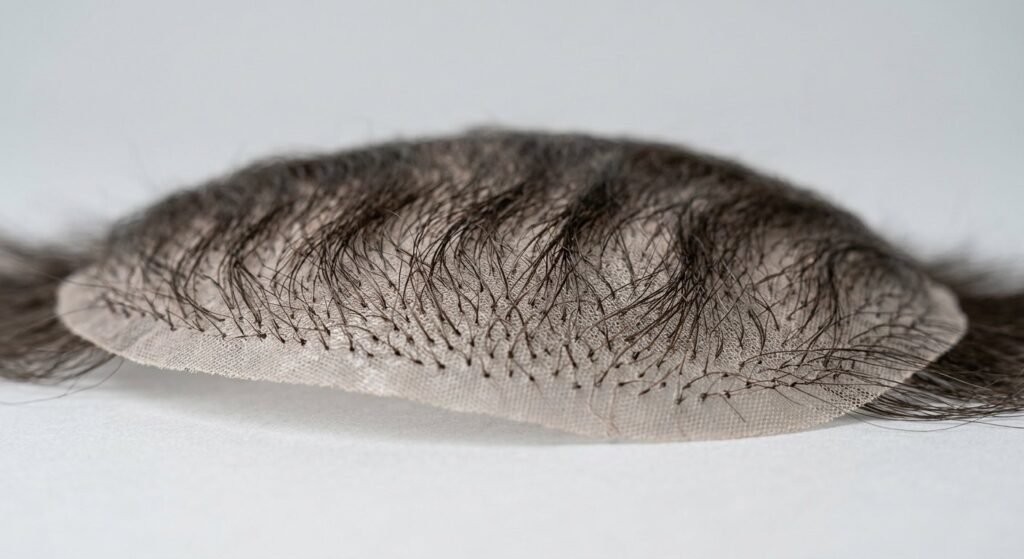
Because it touches your skin, the base controls far more than attachment:
- Hairline realism — how invisible the front edge looks in bright light.
- Breathability — whether air and sweat can move, which decides comfort in heat.
- Lifespan — how many weeks or months the material survives before it thins, frays or lifts.
- Maintenance effort — how easy it is to clean adhesive off and how gently it must be handled.
- Styling freedom — whether you can part the hair anywhere or are limited to one direction.
Once you see the base as the part doing this work, the choice becomes much less about which material is “best” and much more about which trade-off suits your life.
The four base types at a glance
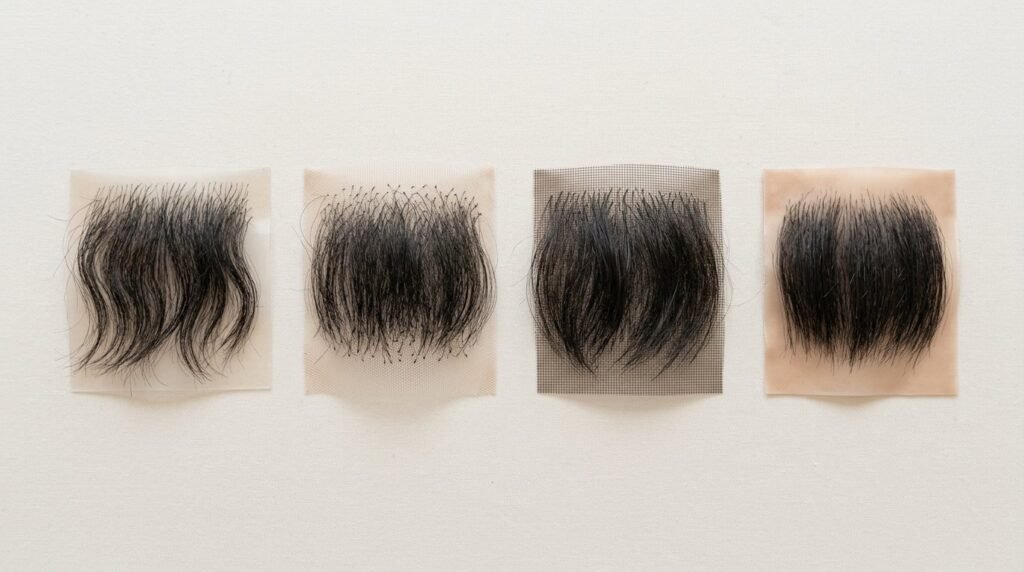
| Base type | Realism | Breathability | Typical lifespan | Upkeep | Best for |
|---|---|---|---|---|---|
| Thin skin (PU) | Excellent — edge almost disappears | Low | Shorter for ultra-thin, longer for thicker skins | Easiest — wipes clean | Exposed hairlines, events, first-time wearers |
| Lace | Very good — knots can be bleached | Excellent | Moderate, delicate | Gentle handling needed | Hot climates, daily long wear, active routines |
| Monofilament | Good — fine mesh slightly visible up close | Good | Longest of the common bases | Easy and forgiving | Value, durability, beginners |
| Silk | Excellent — no visible knots, scalp-like | Moderate | Moderate | Gentle, premium care | Partings, crown coverage, premium finish |
Lifespans are indicative ranges rather than promises. How long any base lasts depends on how many hours a day you wear it, how much you sweat, sun and chlorine exposure, the products you use and how carefully you clean it.
Skin bases: the most natural-looking hairline
A skin base — sometimes called a PU or poly base — is a very thin, translucent sheet of medical-grade polymer with hair injected or knotted into it. The thinnest versions are measured in fractions of a millimetre and, laid against your skin, the front edge can be genuinely hard to find even in daylight. Because the surface is smooth and non-porous, it also gives the impression of scalp showing through the hair.
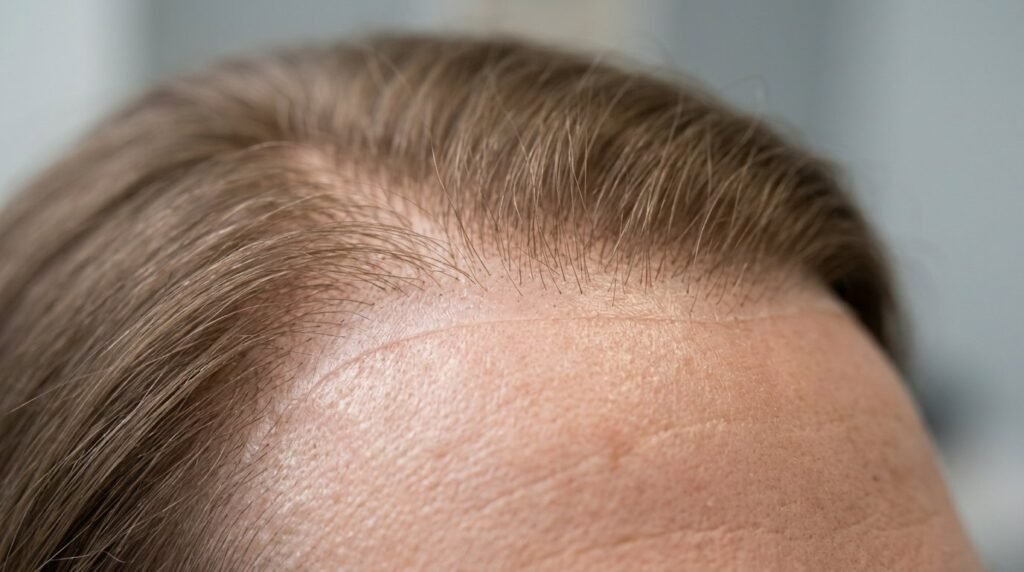
Where it wins. Nothing beats a thin skin base for an exposed front hairline. It lies flat, it does not fray, and it is by far the easiest base to clean — old tape and adhesive lift off the smooth surface without soaking or scrubbing.
Where it struggles. The material does not breathe. On a hot afternoon, or during a workout, a full skin base can feel warm and sweaty because sweat has nowhere to evaporate to. Ultra-thin skins are also the most delicate: they give you the best look for the shortest time, and pulling tape off too aggressively can tear them. Thicker skin bases last much longer but the edge becomes more visible.
Choose it if your hairline is on show, you want the most undetectable edge possible, and you are comfortable replacing the system more often.
Lace bases: the breathability champion
Lace is a fine mesh — usually French lace, which is sturdier, or Swiss lace, which is finer and more delicate — with each hair hand-tied to the mesh with a tiny knot. Air moves straight through it. In a climate like India’s, that single property changes the daily experience of wearing a hair patch more than anything else on this list.
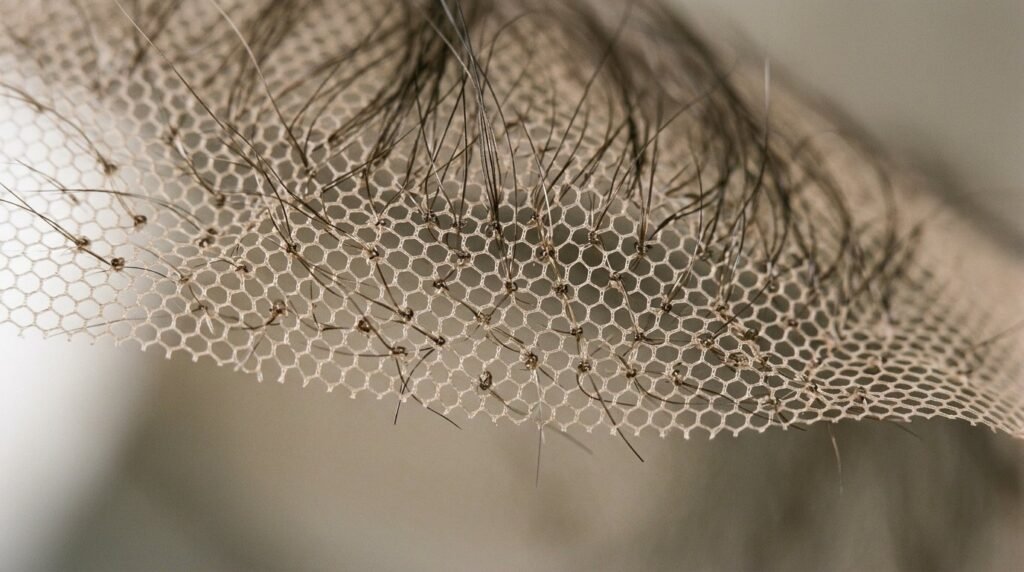
Where it wins. Comfort in heat, weight (it is the lightest option), and a soft front edge that can be made even less visible with bleached knots. If you wear your system twelve hours a day, commute, train or work outdoors, lace is the base that keeps feeling fine at hour ten.
Where it struggles. Lace is delicate. It can fray at the edges, it does not tolerate rough handling or harsh solvents well, and cleaning takes a gentler touch. The knots are also the reason lace is slightly less invisible than skin right at the hairline — although bleaching them, and a good professional blend, narrows that gap considerably.
Choose it if you live somewhere hot or humid, sweat a lot, wear the system for long hours, or simply cannot tolerate a warm scalp.
Monofilament bases: built for durability
Monofilament — “mono” for short — is a finer, tighter woven mesh that is noticeably tougher than lace. It holds its shape well, supports higher hair density without sagging, and puts up with the kind of handling that would damage lace or thin skin. Many systems use mono across the top with a lace front or a skin perimeter, which is a smart way to get durability where it matters and realism where it shows.
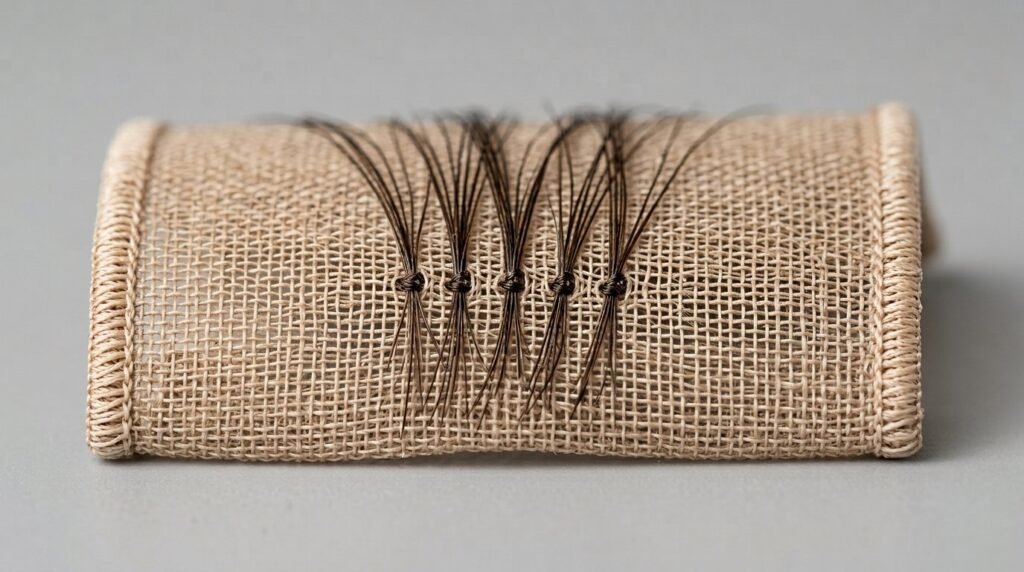
Where it wins. Longevity and value. Of the common bases, mono generally survives the longest under regular wear, which makes it a sensible first system for anyone still learning the maintenance routine. It is also the most forgiving base to clean.
Where it struggles. The mesh is slightly more visible than skin or silk if someone is centimetres from your scalp under bright light, and it is a touch stiffer, so it hugs the head a little less closely.
Choose it if you want the most months out of every system, you are new to hair patches and expect to make a few handling mistakes, or you want higher density.
Silk bases: the premium, scalp-like finish
A silk base adds a layer of silk over the knotted foundation. The hair is knotted underneath and then drawn up through the silk, so from above you see no knots at all — just hair appearing to grow out of what looks like scalp. It is the closest any base comes to replicating the way a parting looks on real skin.
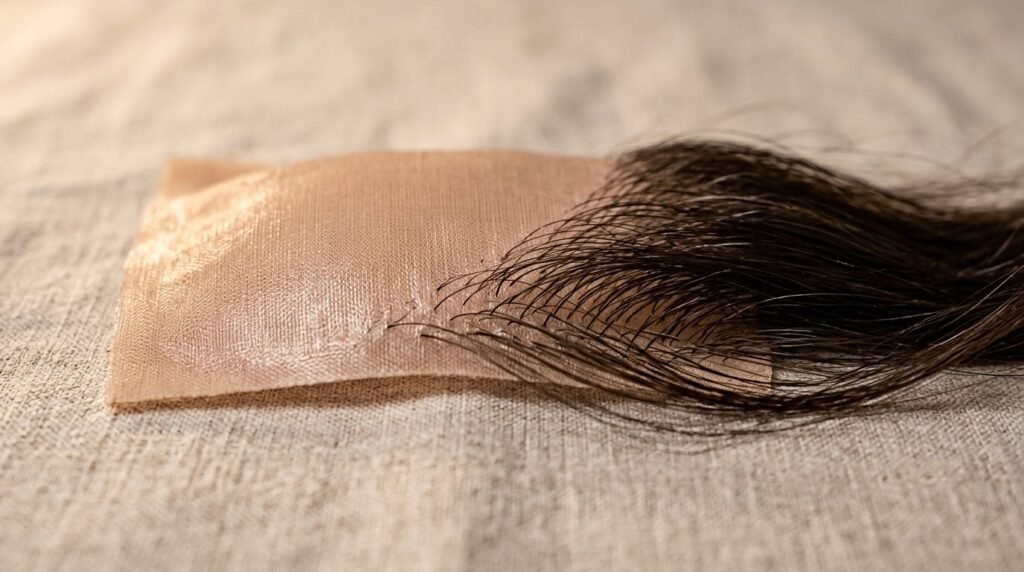
Where it wins. Realism where you part your hair. If you wear a side or centre parting, or you want crown coverage that looks like scalp rather than mesh, silk is the most convincing option available.
Where it struggles. The extra layer makes it warmer than lace, it is the most expensive of the four, it is delicate, and it is usually made in smaller sizes — so silk is typically used for a topper or the parting area of a system rather than the whole base.
Choose it if realism at the parting is your priority and you are happy to invest more and handle it gently.
What people actually notice: the hairline
If you only optimise one thing, optimise the front. Nobody studies the crown of your head; people do look at your hairline when they talk to you. Two details matter most. The first is the edge — a graduated, slightly irregular front edge reads as natural, while a straight, dense line reads as a hair patch. The second is the knots — bleached knots on a lace front, or a thin skin strip, both keep the transition from forehead to hair convincing.
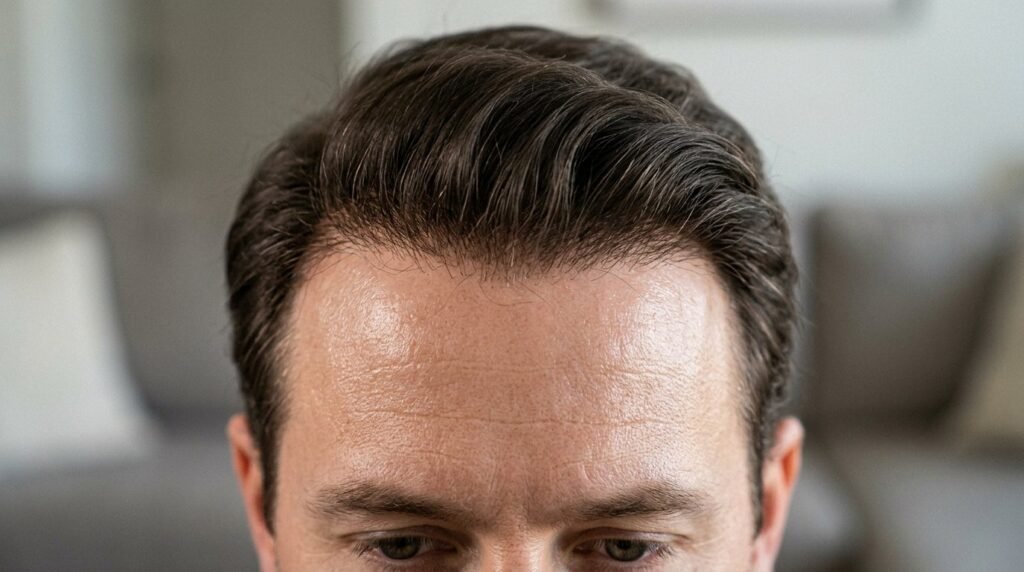
Whatever base you choose, budget for a professional trim and blend after fitting. A good base with a bad blend looks worse than a decent base blended by someone experienced — and it is the single cheapest improvement you can make. Our step-by-step guide to applying a hair patch at home covers where to sit the front edge and how to blend it.
Living with it in heat, sweat and humidity
Breathability is not a marketing detail — it decides whether you forget you are wearing a system or count the hours until you can take it off. Roughly speaking, from most to least breathable: lace, monofilament, silk, skin.

Whatever you wear, sweat, salt water, chlorine and strong sun all shorten the life of both the hair and the base, so rinse with clean water after heavy sweating or swimming and let the system dry naturally. The full routine is in our hair patch care guide, and if you are weighing a patch against other routes, our hair patch vs hair transplant comparison explains where each option makes sense.
How to choose in five questions
- Is my hairline on show? If yes, put realism first — a thin skin base or a lace front. If you wear fringes or forward styles, you have more freedom.
- How hot and sweaty is your day? Long commutes, outdoor work or regular training point to lace for breathability.
- How long do you want between replacements? If the answer is “as long as possible”, mono is the durable choice; ultra-thin skin is the opposite end of that scale.
- How much maintenance will you realistically do? Skin wipes clean fastest. Lace and silk need gentler, more patient cleaning. Be honest here — the best base is the one you will actually look after.
- Do you need a parting? A visible parting or crown coverage suits silk; a fixed, swept-back style does not need it.
A few pairings that work well in practice: lace with a skin perimeter for breathability plus a clean, easy-to-tape edge; mono with a lace front for durability plus a natural hairline; full thin skin for maximum realism on shorter replacement cycles.
Common questions
Which base is best for a first hair patch?
Monofilament, or mono with a lace front. It is the most forgiving material to handle while you learn the cleaning and re-taping routine, and it lasts longer than the more delicate options — so early mistakes cost you less.
Which base lasts the longest?
Generally monofilament, followed by thicker skin bases. Ultra-thin skin and Swiss lace give the most natural look but trade away lifespan to do it. Care habits move these numbers more than the material does: gentle cleaning, avoiding harsh solvents and letting the system dry properly all add weeks.
Can I swim and exercise with a skin base?
Yes — once the bond is set, modern tapes and adhesives are water-resistant, and you can shower, swim and train in any of these bases. The difference is comfort and aftercare: a skin base will feel warmer during exercise, and you should rinse and dry the system afterwards. See our care guide for the post-workout routine.
Is lace or skin better for the hairline?
Thin skin is usually the most invisible edge, which is why it is used so often at the front. Lace is very close, especially with bleached knots, and far more comfortable in heat. Many wearers solve it with a hybrid: lace across the top for airflow, skin at the front and perimeter for the edge and easy taping.
How do I know when the base needs replacing?
Watch for edges that fray or curl, a material that has gone stiff or cloudy, hair shedding that thickening products will not fix, tape that no longer holds for the usual stretch, and any small tear near the front. Two systems kept in rotation also last longer than one worn every single day.
Important: Hair loss can have medical causes. This article is general product education, not medical advice — please consult a qualified dermatologist or trichologist for diagnosis and treatment guidance.
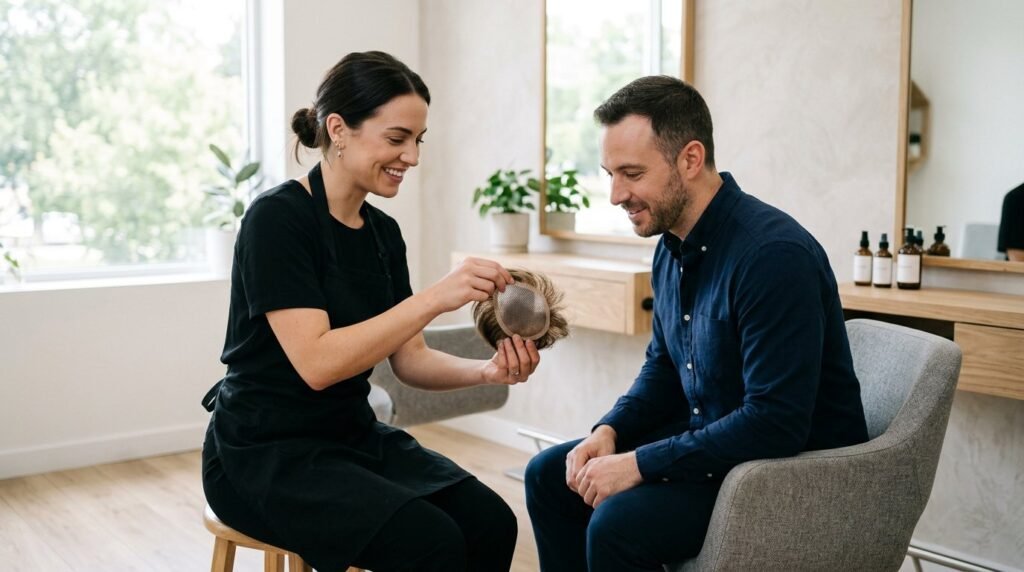
Still deciding? Handling the four bases in person settles the question faster than any article. Book a free sizing and fitting consultation — message us on WhatsApp or browse the men’s hair patch collection to see the base options available.
Looking for more background first? Start with our hair wigs vs hair patches buying guide or browse all of our hair care and hair system guides.