
Ask ten people what a hair patch costs in India and you will get ten different numbers, usually between ₹5,000 and ₹80,000. That range is not because sellers are dishonest — it is because they are answering different questions. One quote is for the hair system alone. Another includes the fitting, the first servicing and six months of tape. A third is for a custom-made piece measured against your scalp, while a fourth is a stock system taken off a shelf.
So this guide does something most price pages do not: it separates the cost of the system from the cost of running it, then shows you which of the four common base materials gives you the lowest cost per month. All figures are in Indian rupees at the time of writing. On this site prices display in your local currency, so you will see the converted figure next to each product.

The short answer: hair patch prices at a glance
If you want a number before the explanation: a good 100% human hair patch from a specialist seller in India costs roughly ₹7,000 to ₹30,000 at the time of writing. Salon packages that include fitting and servicing commonly quote ₹40,000 to ₹80,000. Anything under about ₹6,000 is almost always synthetic fibre or a very short-life system, and that is where most bad first experiences come from.
| What you’re buying | Typical price | How long it lasts | What the money buys |
|---|---|---|---|
| Entry stock system (poly or mono base) | ₹7,000 – ₹12,000 | 2 – 6 months | 100% human hair, standard size and density, fixed colour |
| Mid-range system (mono or lace) | ₹13,000 – ₹20,000 | 6 – 12 months | Better hair quality, more natural density, longer base life |
| Premium system (silk top, fine lace) | ₹18,000 – ₹32,000 | 4 – 8 months | No visible knots, scalp-like parting, hand-finished hairline |
| Full-head wig / full coverage | ₹22,000 – ₹40,000 | 9 – 18 months | Complete coverage, maximum coverage area and hair volume |
| Salon package (system + fitting + servicing) | ₹40,000 – ₹80,000 | varies | The system plus someone else doing the work |
Lifespans are realistic ranges, not promises. How long a system lasts depends on how many hours a day you wear it, how much you sweat, sun and chlorine exposure, the products you use and how gently you clean it — the same system can last twice as long on one head as on another.
What actually drives the price
Two hair patches can look identical in a photograph and differ by ₹20,000. Six things create that gap, and only two of them are visible once the patch is on your head.
- Hair quality and origin. This is the single biggest factor. Virgin, cuticle-aligned (Remy) human hair behaves like your own hair — it moves, it takes heat, it holds a style, and it survives months of washing. Processed hair, or hair blended with synthetic fibre, costs a fraction and shows it within weeks: it tangles, it shines under tube lights and it will not hold a parting.
- Base material. A skin base is inexpensive to manufacture. A silk top, where every strand is knotted beneath a layer of silk so no knot is visible from above, is enormously labour-intensive. You are paying for skilled hand work, not material.
- Density. Density is how much hair is knotted in per square inch. Light density (roughly 80–100%) looks right on a receding hairline and costs less. Medium (110–130%) is the most popular. Heavy density costs more in hair and more in weight on your head — and, counter-intuitively, heavy density on a young-looking hairline is one of the easiest ways to look like you’re wearing something.
- Coverage area. A small crown patch needs far less material and far less hair than a system covering the full top of the head.
- Stock versus custom. A stock system is built to a standard template and trimmed to fit. A custom system is built from a template of your scalp, with your grey percentage blended in and the hairline designed around how you actually style your hair. Custom costs more and is worth it in specific situations, described below.
- Finishing. Bleached knots, a graduated front hairline that starts sparse and builds, grey blended strand by strand rather than dyed in — these are the details that stop people noticing, and they are skilled hand work.
Base by base: what you pay and what you get
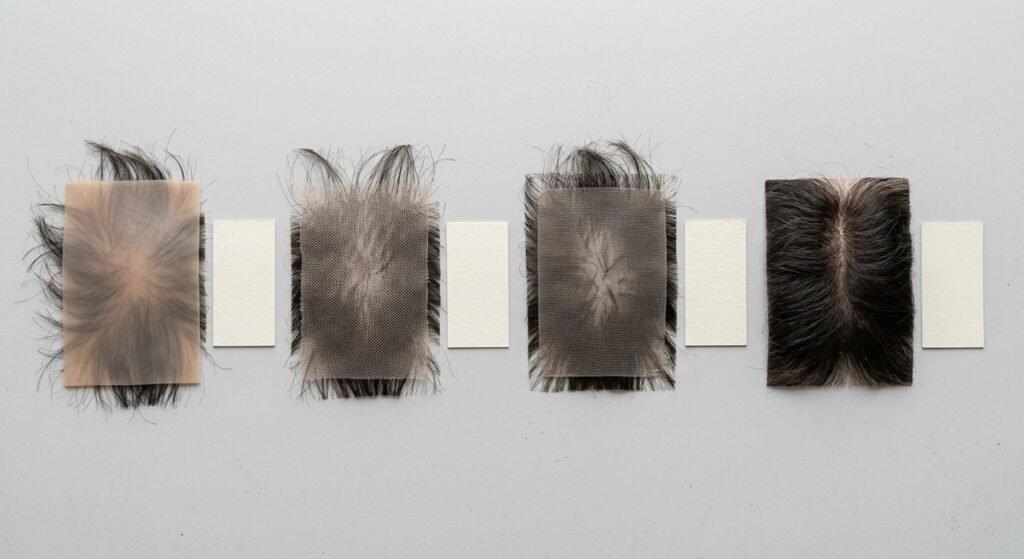
If you have not read our guide to hair patch base types, it explains what each material is and how it behaves in heat and humidity. This section is purely about what each one costs and whether it is good value.
Skin (poly) bases — ₹7,000 to ₹20,000
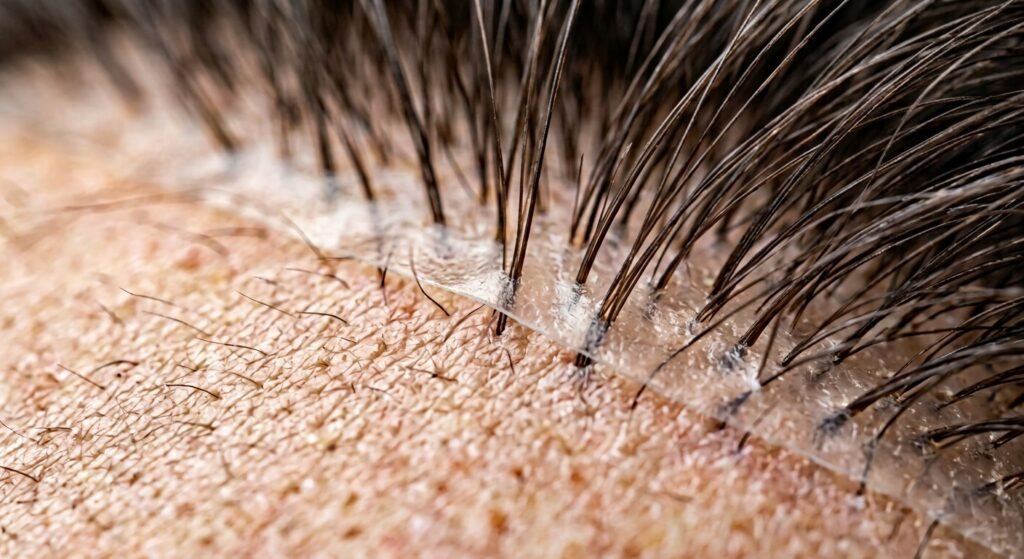
Thin skin is the cheapest route to a genuinely invisible hairline. The material is a translucent polymer sheet — sometimes called PU or poly — that lies flat and disappears against the skin. It is also the easiest base to clean, because old adhesive wipes straight off the smooth surface.
The trade-off is lifespan. The thinnest skins give you the best look for the shortest time; they are delicate, and aggressive tape removal tears them. Thicker skin bases last much longer but the front edge becomes more visible. Skin also does not breathe, which matters in an Indian summer.
Where the value is: if your hairline is on show and you want the most undetectable edge for the least money. On this site the Hairline Patch with Poly Base sits at ₹9,599, and the full skin base collection starts there.
Lace bases — ₹12,000 to ₹30,000
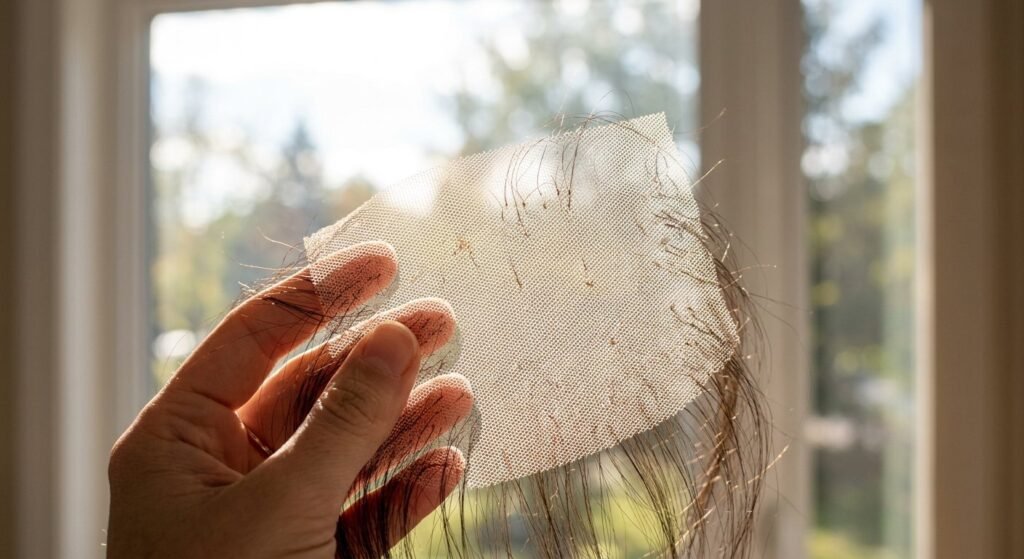
Lace is a fine mesh with each hair hand-tied to it. Air moves straight through, which is the reason people in hot, humid cities end up loyal to lace even when it costs more. You are paying for hand-tying time and for a material that is fiddly to work with.
Lace is the most delicate of the common bases and needs gentle handling, but well cared for it runs for months. The knots at the front can be bleached so they disappear, which is what makes a lace hairline convincing up close.
Where the value is: daily wear in a hot climate, an active routine, or anyone who has given up on a patch because their scalp got too sweaty. The Curly Hair Patch with Lace Base is ₹17,999, and the lace collection shows the full range.
Monofilament bases — ₹7,000 to ₹22,000
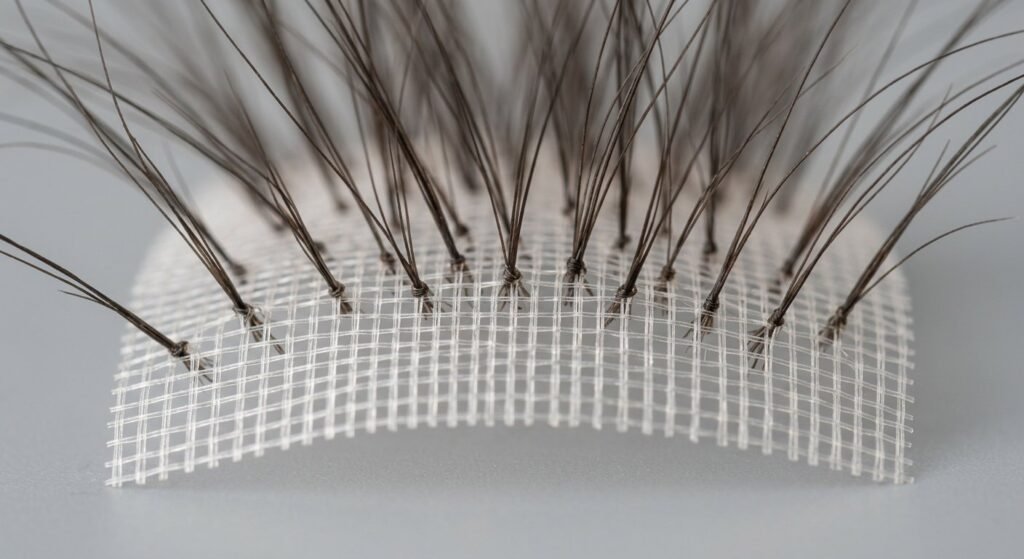
Monofilament — usually shortened to mono — is a fine woven mesh that is tougher than lace and cheaper to produce than silk. It is the workhorse of the hair system world, and on cost per month it is very often the best value of the four.
The compromise is that a fine mesh pattern can be faintly visible if someone is examining your scalp from very close, and mono is slightly less breathable than lace. Neither matters to anyone who is not looking for it.
Where the value is: first-time wearers, anyone replacing systems on a budget, and anyone who wants to stop thinking about their hair. Prices here start at ₹7,199 for a Mono Hair Patch, run through the Mirage Monofilament at ₹15,599, and the whole monofilament range is worth comparing side by side.
Silk bases — ₹18,000 to ₹32,000
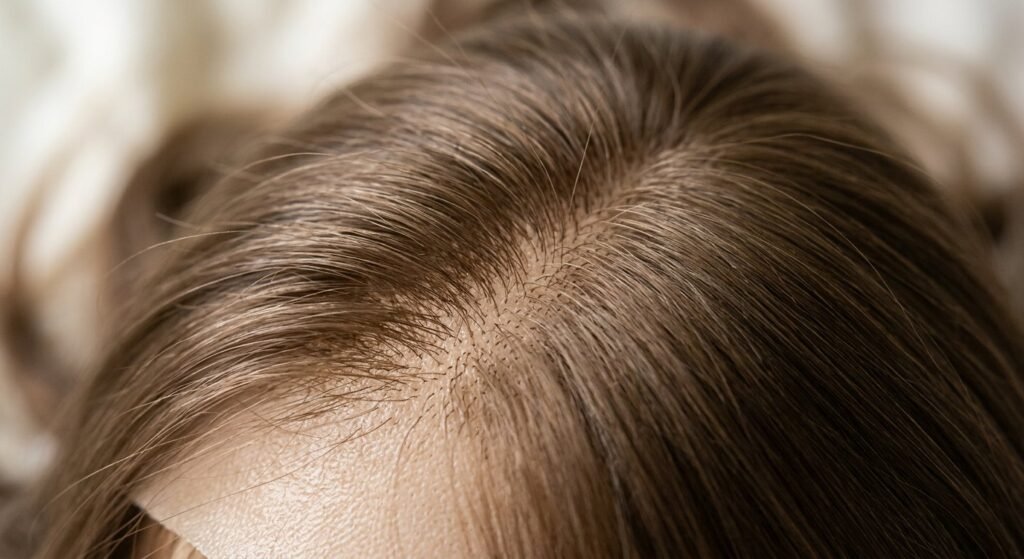
A silk top hides every knot under a layer of silk, so from above all you see is hair emerging from what looks exactly like scalp. It is the most convincing material there is for a parting, and it is the most expensive for a simple reason: that result can only be produced by hand, strand by strand.
Silk is less breathable than lace and mono, and it needs careful handling. It rewards people who part their hair, wear their hair slightly longer on top, or cover a crown that people see from above.
Where the value is: partings, crown coverage, and anyone who has been unhappy with visible knots. The Golden Silk Base patch is ₹18,999 and is the clearest example of what this money buys.
The costs nobody quotes you
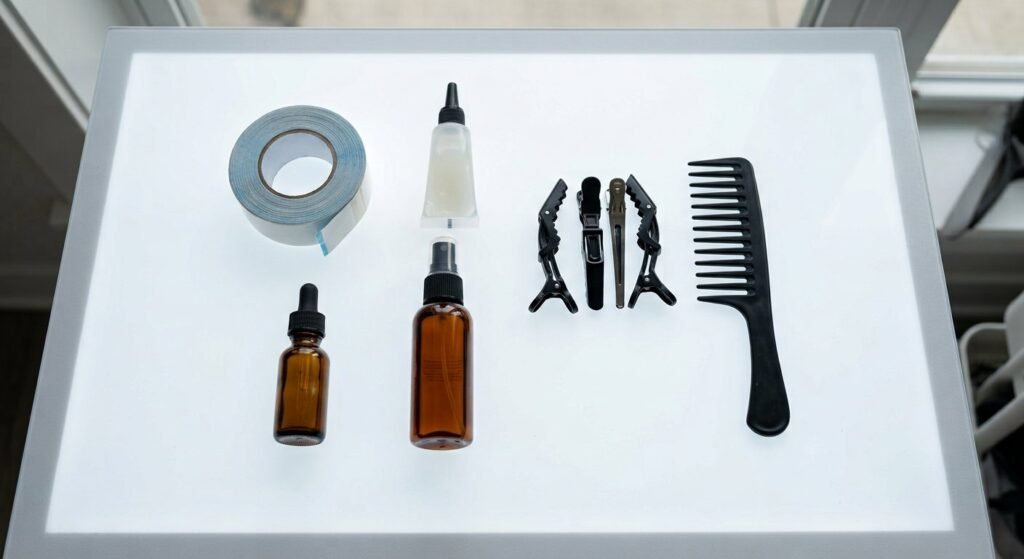
Here is the part that turns a ₹9,000 patch into a ₹40,000-a-year commitment. A hair system is not a one-time purchase — it is a subscription you pay in consumables and replacements.
| Item | Price | How often | Typical annual cost |
|---|---|---|---|
| Tape (e.g. Walker Bond Tape) | ₹239 a roll | Every 1 – 2 weeks | ₹3,000 – ₹6,000 |
| White tape, 25 mtr roll | ₹1,199 | Once or twice a year | ₹1,200 – ₹2,400 |
| Bonding glue | ₹2,999 | Lasts several months | ₹3,000 – ₹6,000 |
| Adhesive remover (C22) | ₹959 | Every few weeks | ₹1,000 – ₹2,000 |
| Scalp guard | ₹599 | Every few months | ₹600 – ₹1,200 |
| Styling products (spray, gel, serum from ₹239) | ₹239 – ₹599 each | Replaced occasionally | ₹1,500 – ₹3,000 |
| Salon servicing, if you do not do it yourself | ₹500 – ₹1,500 a visit | Every 2 – 4 weeks | ₹6,000 – ₹18,000 |
Done at home with tape, most people land somewhere between ₹6,000 and ₹10,000 a year in consumables. Done with liquid adhesive, budget a little more. Paying a salon for every refit is the most expensive path by a wide margin — which is why learning to apply a hair patch at home is the single biggest saving available to you, and it is a skill that takes an afternoon to learn.
The number that matters: cost per month
Sticker price is the wrong number. What you actually want is the monthly cost of looking the way you want to look. Here are three realistic scenarios using systems in our own range — the maths is the same wherever you buy.
| Scenario | System | Life | Replacements a year | System cost | Consumables | Per year | Per month |
|---|---|---|---|---|---|---|---|
| Budget — thin skin, worn daily | ₹9,599 poly hairline patch | ~3 months | 4 | ₹38,396 | ₹6,000 | ₹44,396 | ₹3,700 |
| Balanced — monofilament | ₹15,599 Mirage mono | ~8 months | 1.5 | ₹23,399 | ₹7,000 | ₹30,399 | ₹2,533 |
| Premium — silk top | ₹18,999 Golden silk base | ~6 months | 2 | ₹37,998 | ₹9,000 | ₹46,998 | ₹3,917 |
Read that middle row again. The cheapest system in the table costs the most per month, because replacing a short-life base four times a year costs more than buying a durable one once or twice. The mid-priced monofilament is the cheapest way to wear hair. This is the single most useful thing on this page, and it is invisible if you only compare prices on a product grid.
A good care routine moves every number here in your favour — every extra month you get out of a system is a month you are not paying for a replacement.
Stock or custom: where to spend, where to save
Save on: density you do not need, exotic colours you can get from a standard shade, and stock sizing when your coverage area is fairly standard. A stock system trimmed to fit is indistinguishable from a custom one for most people.
Spend on: hair quality, always. Then on hairline finishing if your front hairline is exposed, and on grey blending if you are over about forty — nothing gives away a system faster than hair that is uniformly, unnaturally dark on a face that is not.
Go custom when: your coverage area is unusual in shape, you need a specific grey percentage matched to your temples, you want a particular wave or curl pattern, or you have been through two stock systems that never quite sat right.
When a cheap patch costs you more
- Synthetic or blended hair sold as human hair. If a “100% human hair” system costs ₹3,000, it is not 100% human hair. Synthetic fibre shines under office lighting, tangles within weeks, and cannot be heat-styled. You will buy again in two months.
- The base material is not named. A seller who will not tell you whether it is poly, lace, mono or silk is hiding the one fact that determines how it will feel and how long it will last.
- “Free servicing” folded into an inflated price. Ask for the system price and the service price separately. Bundling is how a ₹12,000 system becomes a ₹55,000 package.
- No exchange policy. Colour and density are the two things most often wrong on a first order. A seller with no exchange or return path is charging you full price to gamble.
- Wrong density chosen to look “fuller”. This is not a money trap, it is a looks trap, and it is the most common regret we hear. Light to medium density always reads as more natural than heavy.
Five questions to ask before you pay
- Is it 100% human hair, and is it Remy (cuticle-aligned)?
- Which base material, and how thick is it?
- What density, and can I get grey blended in?
- What is the realistic lifespan in writing — not the best case, the typical case?
- What will I spend per month on tape or glue, and can I service it myself?
If a seller answers all five crisply, the price is probably fair whatever it is. If they answer two and deflect three, the price does not matter.
Common questions
How much does a hair patch cost in India?
At the time of writing, a 100% human hair patch from a specialist online seller runs about ₹7,000 to ₹30,000 depending on base material, hair quality and coverage. Salon packages that include fitting and ongoing servicing typically quote ₹40,000 to ₹80,000. Systems below about ₹6,000 are usually synthetic or very short-life.
Why is the range so wide?
Mostly hair quality and base construction. Virgin cuticle-aligned human hair costs many times more than processed hair, and a hand-knotted silk top involves hours of skilled labour that a machine-made skin base does not. You are rarely paying for a difference you can see in a product photo — you are paying for a difference you feel after three months of wear.
Is a hair patch cheaper than a hair transplant?
In the short term, yes, by a wide margin. A transplant is a larger one-time surgical cost; a patch is an ongoing cost that never ends. Our comparison of hair patches and transplants sets out both sides honestly, including the cases where a transplant is the better financial decision.
How much do I spend on maintenance every month?
If you service it yourself with tape, roughly ₹500 to ₹900 a month including replacement systems spread across the year. Liquid adhesive costs slightly more. Salon servicing for every refit adds ₹500 to ₹1,500 per visit on top.
Does a more expensive patch always last longer?
No, and this surprises people. A mid-priced monofilament often outlasts a much costlier silk top, because mono is simply a tougher material. Match the base to your lifestyle and you will spend less; buy on price alone and you will usually spend more per month.
Should I buy a full wig instead of a patch?
If your hair loss covers the whole head, a wig is the right product and the better value — you can see our full wig range from ₹22,799. If you still have healthy hair at the sides and back that you want to blend into, a patch is the better choice. Our wigs versus patches guide walks through the decision.
Do the prices include servicing and GST?
Product prices on this site are for the system itself and include applicable taxes shown at checkout; servicing, tape, glue and remover are separate, as they are with most sellers. Always ask which of the two you are being quoted for.
What to do with all this
Start by choosing the base material that suits your life rather than your budget, because as the table above shows, the cheapest sticker price is often the most expensive month. If you are unsure where to begin, read the base types guide first — it takes ten minutes and it will save you from the most common first purchase mistake, which is buying a beautiful hairline on a base you cannot live with.
You can compare every system side by side in the men’s hair patch collection, or stock up on tapes, adhesives and removers if you already have a system and want to bring your running costs down. Prices on the site display in your own currency, so you will always see the exact figure you will pay.